
Neon Signs UAE: Traditional vs LED Neon for Business
Compare traditional glass and LED neon signs UAE businesses use. Discover cost, durability, energy savings, and Dubai Municipality permit factors.
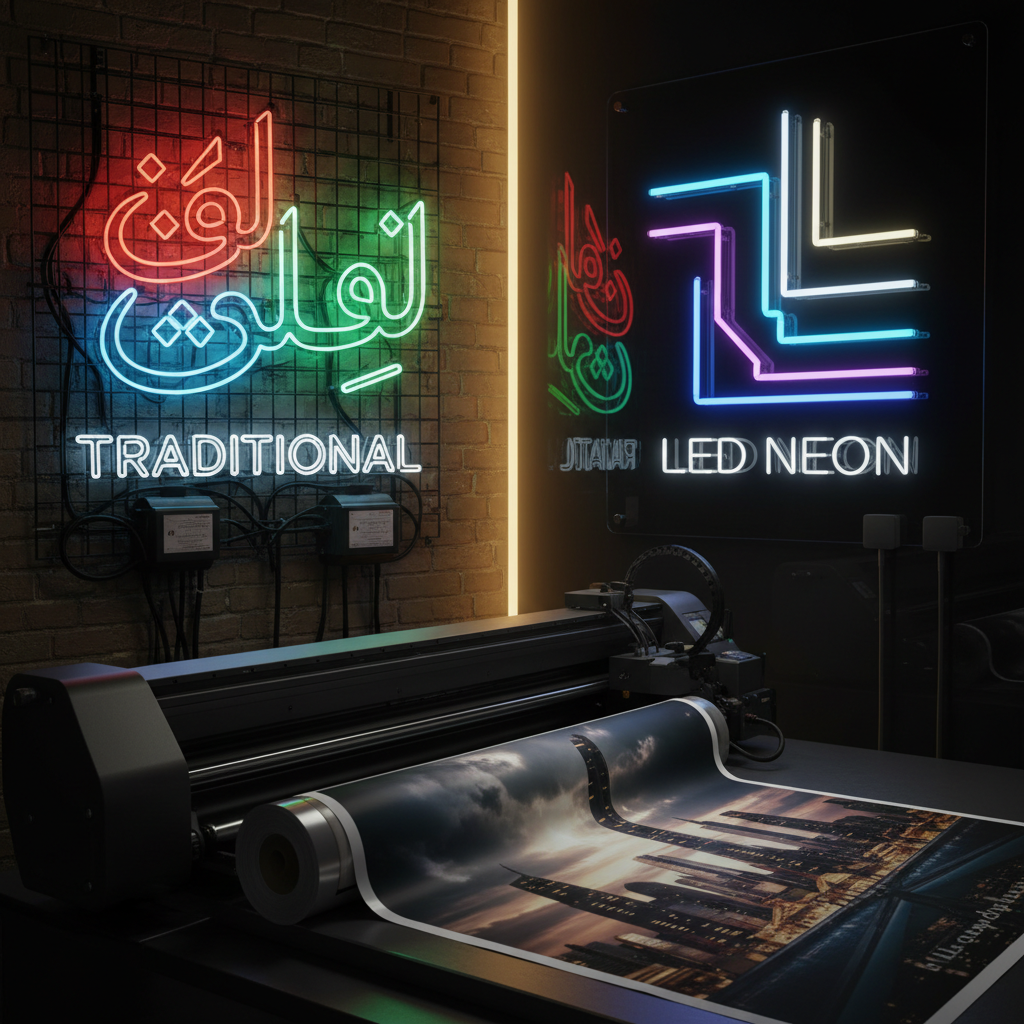
Choosing the right illuminated display can redefine your brand presence, but deciding between traditional glass and flexible silicone can be challenging. For companies investing in neon signs UAE markets demand both striking visual appeal and resilience against high ambient temperatures. Whether you operate a boutique café in Jumeirah, a corporate office in Business Bay, or an entertainment venue on Yas Island, selecting between classic glass gas tubes and modern low-voltage alternatives determines your upfront costs, energy bills, and long-term maintenance.
Here is an objective comparison to help UAE businesses make an informed choice.
Traditional Glass vs Modern LED Neon Dubai Displays
Traditional glass neon relies on hand-bent glass tubing filled with inert gases like neon or argon. When high-voltage electricity passes through the electrodes, the gas glows with an authentic, multidirectional radiance.
In contrast, led neon dubai installations use flexible, UV-resistant PVC or silicone tubing embedded with tightly spaced, energy-efficient light-emitting diodes. These strips sit on clear acrylic, metal, or composite backing panels shaped by CNC routers.
Key differences include:
- Operating Voltage: Glass units require high-voltage transformers (3,000V to 15,000V), whereas LED versions operate on standard 12V or 24V low-voltage drivers.
- Impact Resistance: Glass is rigid and brittle, making it vulnerable to accidental impact during transport or cleaning. LED silicone is shatterproof and flexible.
- Light Dispersion: Glass provides a 360-degree organic warmth that many vintage purists prefer, while LED delivers a focused, 180-degree front illumination with uniform brightness.
Surviving the UAE Climate: Heat, Sand, and Humidity
Operating exterior signage across Dubai, Abu Dhabi, and the Northern Emirates presents distinct environmental hurdles. Summer temperatures regularly exceed 45°C, accompanied by coastal humidity above 80% and fine desert sand dust.
Traditional glass tubes cope well with external heat because glass does not warp. However, high-voltage transformers degrade quickly when exposed to fine sand penetration and outdoor moisture, leading to frequent electrical tripping.
When choosing modern custom neon signs for outdoor storefronts, quality LED systems hold a significant advantage if specified with an IP67 or IP68 waterproof rating. High-grade silicone jacketing resists yellowing from intense UV radiation far better than cheap PVC alternatives. For interior spaces—such as air-conditioned mall outlets in Dubai Mall or Mall of the Emirates—both technologies perform reliably without climate-related degradation.
Energy Efficiency, Safety, and Operational Costs
Running illuminated displays for 12 to 16 hours daily directly affects commercial utility expenses. Power consumption is where modern neon signage demonstrates measurable financial savings.
- Power Consumption: LED neon consumes approximately 70% to 80% less electricity than equivalent glass gas installations. A medium-sized script sign using LEDs typically draws 60 to 100 watts, compared to 300 to 450 watts for a glass transformer setup.
- Safety and Fire Compliance: Dubai Civil Defence and commercial property managers enforce strict indoor fire regulations. Glass neon operates at warm-to-hot surface temperatures under high voltage, requiring dedicated fire-rated switches. LED signs run cool to the touch and operate on safe DC voltage, making them ideal for low-hanging retail walls, photo booths, and hospitality interiors.
- Maintenance Lifespan: Quality LEDs run for 40,000 to 50,000 hours before noticeable lumen depreciation. Traditional neon tubes can last up to 30,000 hours, but gas refills and fragile electrode replacements demand specialized workshop servicing.
Municipality Approvals and Commercial Regulations
Installing exterior commercial signage across the Emirates involves local authority permits. In Dubai, exterior storefront displays require permits through Dubai Municipality and the Roads and Transport Authority (RTA) if visible from primary transit corridors.
Key regulatory considerations:
- Light Pollution Standards: Dubai Municipality sets strict limits on lux levels and strobe effects to avoid distracting motorists. LED systems allow precise dimmer integration to comply with night-time brightness thresholds.
- Mall Management Approvals: Private developers like Emaar, Nakheel, and Majid Al Futtaim require comprehensive technical submittals, including electrical single-line diagrams (SLDs). The low-voltage nature of LED configurations makes fit-out approvals faster and less complex.
- Emirate-Specific Variance: While Dubai and Abu Dhabi enforce stringent digital submittals via municipal portals, requirements in Sharjah, Umm Al Quwain, and Ras Al Khaimah may place heavier emphasis on structural mounting safety and wind load calculations for exterior facades.
Working with an Experienced Neon Sign Maker
Producing bespoke commercial displays requires precision engineering. An experienced neon sign maker will assess your vector artwork, recommended acrylic backing (such as hollow-cut, cut-to-shape, or full rectangular panels), and specify proper power supply wattage to prevent voltage drops across extended runs.
Whether you need intricate Arabic typography, minimalist line art, or bold English block lettering, working with a regional fabrication facility ensures your signs withstand regional conditions while meeting local electrical codes. High-grade components prevent flickering, discolouration, and driver failures within months of installation.
Ready to elevate your storefront or commercial interior? Contact Sana Arts today to discuss your project specifications and request a customized quote for premium signs delivered anywhere across the UAE.
Frequently asked questions
How much do custom neon signs cost in Dubai?⌄
Custom LED neon signs UAE businesses order typically range from AED 800 for small desktop logos to AED 4,500 or more for large multi-layered storefront scripts, depending on size and acrylic backing.
Do I need Dubai Municipality approval for neon signage?⌄
Yes, but outdoor neon signage visible from public roads requires permits from Dubai Municipality and the RTA to ensure electrical safety and lux level compliance.
How do I maintain led neon dubai installations in dusty conditions?⌄
LED neon dubai installations require minimal maintenance beyond regular microfiber dusting, as their low-voltage transformers and sealed silicone jackets are completely maintenance-free.
Ready to bring your brand to life?
Request a Quote